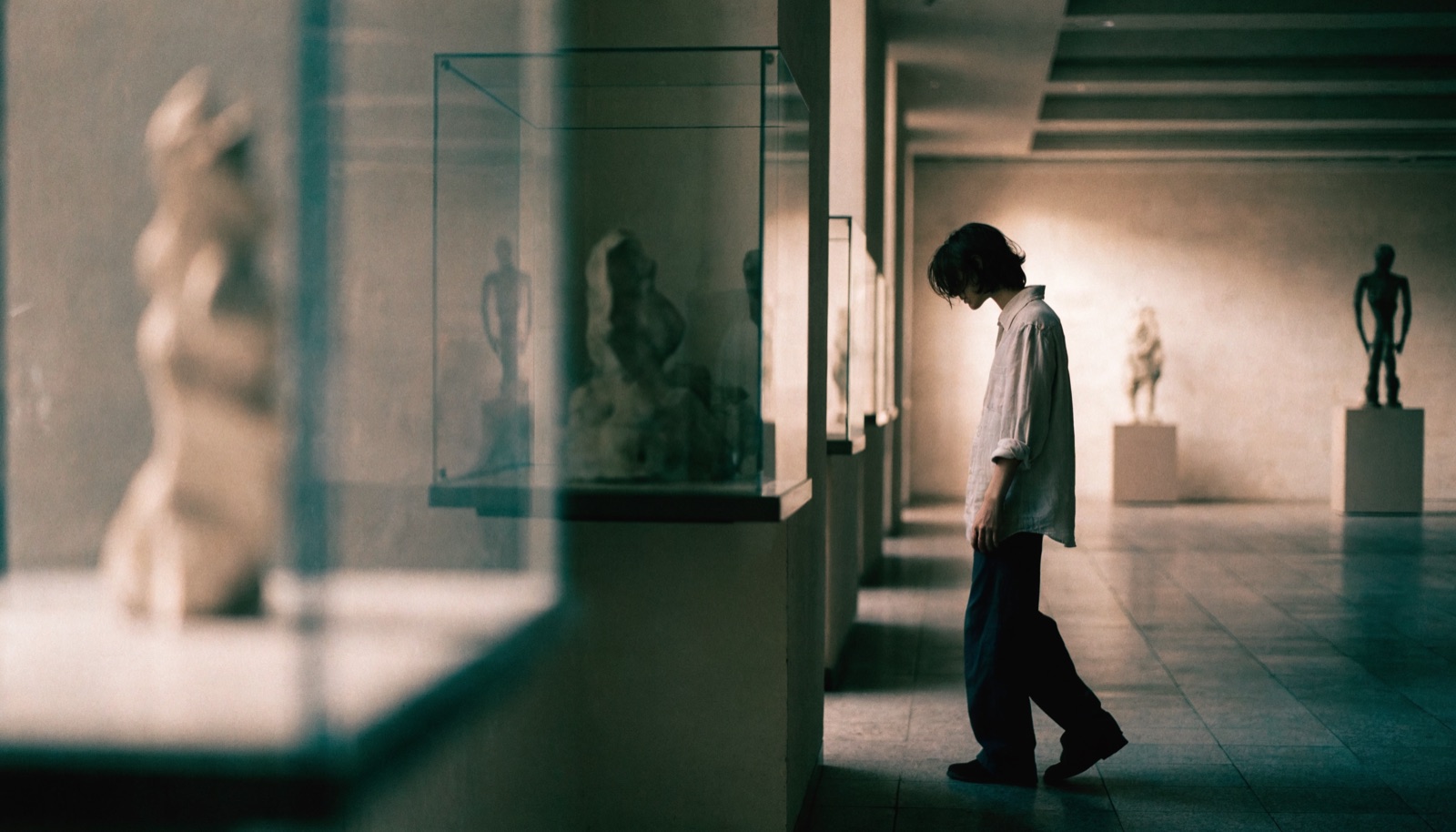
The world is not a fact of nature. It is an accumulation of deliberate projects — hotels, railways, payment networks, constitutions — each one willed into existence by a person who decided the current arrangement was insufficient. Once you see that clearly, you cannot unsee it, and the implications for how you build a company are immediate and irreversible.
In May 2022, John Collison — co-founder and President of Stripe — posted a thought on X that has since circulated widely among founders and operators: 1 “As you become an adult, you realize that things around you weren’t just always there; people made them happen. But only recently have I started to internalize how much tenacity everything requires. That hotel, that park, that railway. The world is a museum of passion projects.” The observation is deceptively simple. Its operational consequence is not.
Key takeaways
- Seeing the world as built — not given — is the first and most durable cognitive shift a founder makes. Everything else follows from it.
- John Collison’s “museum of passion projects” insight is not motivational decoration; it is a precise description of how durable institutions come into existence.
- The shift from observer to builder is a perceptual move, not a personality trait — it can be learned, practiced, and institutionalized inside a team.
- Bain & Company research shows that founder-led companies with an insurgent, owner-oriented mindset outperformed non-founder-led S&P 500 peers by 3.1 times over a 25-year period — the compounding value of treating the world as editable is measurable.
- The museum metaphor has a corollary: every exhibit required tenacity, not just vision. Agency without persistence is tourism.
Why this insight is the founding move
Most people spend their lives as visitors in the museum. They navigate the exhibits — the institutions, the products, the social norms — with varying degrees of sophistication, but they do not question the curatorial decisions. The world, to them, is a given. Founders are not a different species; they are people who have made a specific perceptual shift: they have stopped treating the exhibits as permanent and started reading the plaques. Every plaque says the same thing. Someone built this. Someone decided it should exist. Someone spent years making it real.
Steve Jobs articulated the same insight from a different angle in a 1994 interview: 2 “Life can be much broader, once you discover one simple fact, and that is that everything around you that you call life was made up by people that were no smarter than you. And you can change it, you can influence it, you can build your own things that other people can use.” The two observations — Jobs’s in 1994, Collison’s in 2022 — are separated by nearly three decades and two generations of the technology industry, yet they converge on the same structural point: the world is editable. What Collison adds is the word that Jobs left implicit: tenacity. Vision is the entry ticket. Tenacity is the price of the exhibit.
This is the thesis: seeing the world as built — and therefore editable — is not a mindset hack or a motivational posture. It is a precise epistemological stance that unlocks a specific set of behaviors. Founders who hold it ask different questions, make different bets, and sustain effort through different obstacles than people who treat the world as fixed. The gap between those two orientations is, in large part, the gap between companies that compound and companies that stall.
What the museum metaphor actually describes
Collison’s framing is precise in a way that casual reading can miss. He does not say the world was built by geniuses, or by the well-funded, or by the lucky. He says people made things happen — and that the underappreciated variable is how much tenacity everything requires. 1 The hotel on the corner did not materialize because someone had a vision. It materialized because someone navigated zoning boards, secured financing, managed construction overruns, hired and fired staff, and kept going when the occupancy rate was embarrassing. The railway did not exist because engineers drew diagrams. It existed because someone spent decades lobbying governments, raising capital, and solving problems that had no precedent.
This is the museum’s hidden curriculum: every exhibit is a proof of sustained agency. The beautiful objects on display are the residue of unglamorous persistence. For a founder, this is not discouraging — it is clarifying. If the world’s existing institutions required that level of tenacity to produce, then the bar for building something new is knowable. It is high, but it is not mysterious. It is the bar of consistent, deliberate effort applied over time.
The practical implication is that founders who internalize this framing stop waiting for permission, for the right moment, or for conditions to improve. They understand that the conditions they are waiting for were themselves built by someone who did not wait. The museum’s exhibits are not the result of favorable circumstances. They are the result of people who decided to act under unfavorable ones.
The perceptual shift and its compounding returns
The shift from visitor to builder is not a one-time event. It is a practice — a habit of reading the world as a set of deliberate choices rather than natural facts. And like most practices, it compounds. The more consistently a founder applies it, the more opportunities they identify, the more confidently they act, and the more quickly they move from observation to execution.
The data on this compounding effect is substantial. Bain & Company’s research across thousands of global public companies found that founder-led companies outperformed their non-founder-led S&P 500 counterparts by 3.1 times over a 25-year period from 1990 to 2014. 3 Even excluding technology companies — where founder advantage is most pronounced — the outperformance held at 1.8 times. 4 More recently, Bain’s analysis found that since 2015, founder-led companies outperformed non-founder-led counterparts by 2.1 times in total shareholder returns. 5
These numbers are not an argument for keeping founders in the CEO seat indefinitely. They are evidence that the orientation — the insurgent, owner-minded, world-as-editable stance — produces durable performance advantages. Bain’s research identifies three traits that define this orientation: an insurgent mission, a frontline obsession, and an owner’s mindset. 6 All three are downstream of the same perceptual move Collison describes. You cannot have an insurgent mission if you believe the current arrangement is natural and inevitable. You cannot have an owner’s mindset if you are a visitor in someone else’s museum.
The research also reveals what happens when companies lose this orientation. Only one in nine companies achieves a decade or more of sustained, profitable growth — and when companies fail to sustain it, 85 percent of executives cite internal factors, not external market forces, as the cause. 7 The growth paradox is precise: growth creates complexity, and complexity erodes the founder’s perceptual stance. Teams stop reading the plaques and start maintaining the exhibits. The museum becomes their world, not their project.
Three failure modes of the visitor mindset
Understanding what the builder’s perceptual stance enables also requires understanding what its absence produces. There are three failure modes that follow reliably from treating the world as fixed.
Deference to incumbents. When founders treat existing market structures as natural, they treat incumbents as authorities rather than as prior builders whose choices can be revisited. Stripe itself is the most direct illustration of Collison’s own thesis: the payment infrastructure that existed before Stripe was not a law of nature. It was a set of choices made by prior builders — choices that Stripe’s founders decided to revisit. 8 The same logic applies to every market. The question is not whether the current arrangement can be changed. It always can. The question is whether the founder has made the perceptual move to see it as changeable.
Waiting for conditions. The visitor mindset produces a particular kind of paralysis: the belief that action requires conditions that do not yet exist. The builder’s mindset inverts this. Conditions are not prerequisites for action; they are the raw material that action works on. Every exhibit in the museum was built under conditions that were, at the time, suboptimal. The railway builders did not wait for governments to be cooperative. The internet’s architects did not wait for bandwidth to be abundant. They built toward the conditions they needed, rather than waiting for conditions to arrive.
Mistaking complexity for sophistication. As organizations grow, they accumulate processes, hierarchies, and systems that begin to feel like the natural order of things. Teams stop asking why a process exists and start optimizing within it. This is the organizational equivalent of becoming a visitor in your own museum. Bain’s research is explicit on this point: the most common internal barrier to sustained growth is the loss of the insurgent mission — the sense that the current arrangement is a choice, not a fact. 7 The antidote is not simplification for its own sake. It is the regular practice of reading the plaques on your own exhibits and asking whether you would build them the same way today.
Building the habit into a team
The museum insight is most powerful when it moves from individual perception to organizational practice. A founder who sees the world as editable but leads a team that does not will find their own agency constrained by the visitor mindset of the people around them. The practical question is how to institutionalize the perceptual shift.
Three mechanisms work consistently across stages and geographies.
First-principles questioning as a standing practice. The most effective teams regularly ask why their current arrangements exist — not to disrupt for its own sake, but to distinguish between choices that still make sense and choices that have calcified into assumptions. This is not a quarterly offsite exercise. It is a daily discipline embedded in how decisions are made and how problems are framed.
Ownership at the edges. The builder’s mindset requires that the people closest to the problem have the authority to act on what they see. Bain’s research consistently identifies frontline obsession — the practice of keeping decision-making close to the customer and the operational reality — as one of the three defining traits of companies that sustain growth. 6 When authority is concentrated at the center, the people at the edges become visitors. They observe the problem but cannot act on it.
Celebrating the tenacity, not just the outcome. Collison’s insight is specifically about tenacity — the unglamorous persistence that turns a vision into an exhibit. Teams that celebrate only outcomes inadvertently train people to avoid the long, uncertain middle of any significant project. Teams that celebrate the sustained effort — the decision to keep going when the occupancy rate is embarrassing — build the organizational muscle that the museum’s hidden curriculum describes.
The six gaps that prevent most founders from building durable companies are, in large part, gaps in this practice. The world-as-editable stance is the prerequisite for closing them. Without it, the gaps feel like facts of nature rather than solvable problems.
The tenacity variable
It is worth dwelling on the specific word Collison chose. He did not say the world requires intelligence, or capital, or connections — though all of those help. He said it requires tenacity. The hotel, the park, the railway: each one required someone to keep going past the point where a reasonable person might have stopped.
This is the part of the museum’s curriculum that is most frequently underweighted. The startup ecosystem has developed a sophisticated vocabulary for vision — market sizing, product-market fit, go-to-market strategy — and a comparatively thin vocabulary for the sustained effort that converts vision into institution. The result is a generation of founders who are excellent at articulating what they want to build and underprepared for the experience of building it.
The tenacity variable is not a personality trait that some people have and others do not. It is a function of how clearly a founder sees the world as editable. People who believe the current arrangement is natural tend to interpret resistance as evidence that they are wrong. People who believe the current arrangement is a choice tend to interpret resistance as evidence that they are getting close to something worth changing. The perceptual stance determines the persistence. This is why the museum insight is not motivational decoration. It is load-bearing.
Understanding how credibility compounds over time is the natural complement to this argument: the tenacity that builds an institution also builds the trust that makes the next institution easier to build. The two compound together.
What this means
The museum insight is not a one-time realization — it is a practice. Build it into your team’s operating rhythm: regularly read the plaques on your own processes, push decision authority to the edges, and celebrate sustained effort as explicitly as you celebrate outcomes. The world you are trying to build will require more tenacity than your current plan accounts for. That is not a problem to solve; it is the nature of building exhibits worth visiting.
The perceptual stance Collison describes is one of the most durable signals of founder quality — and one of the hardest to assess from a pitch deck. Look for founders who read the world as a set of deliberate choices rather than natural facts: they ask different questions in diligence, they respond to obstacles differently, and they sustain effort through the unglamorous middle of company-building in ways that visitor-minded founders do not. The Bain data on founder-led outperformance is a market-level confirmation of what this perceptual stance produces at scale.
The most valuable thing an advisor can do for an early-stage founder is not to provide answers — it is to reinforce the perceptual stance that the world is editable. Every time an advisor treats a market structure, a regulatory environment, or a competitive dynamic as a fixed constraint rather than a prior builder’s choice, they are training the founder to be a visitor. The museum metaphor is a useful frame for coaching: ask founders to read the plaques on the institutions they are navigating, and help them distinguish between constraints that are genuinely fixed and constraints that are simply the residue of someone else’s past decisions.
The forward view
The museum is not finished. Every generation of founders adds exhibits — some that last centuries, some that are dismantled within a decade. The question for any founder is not whether the world can be changed. Collison’s observation settles that. The question is whether you have made the perceptual move to see your specific corner of the world as a set of choices that can be revisited, and whether you have built the organizational capacity to sustain the tenacity that revisiting them requires.
The founders who compound — who build institutions that outlast their initial product, their initial market, and their initial team — are the ones who never stop reading the plaques. They understand that the exhibit they are building today will, if they do the work, become part of the museum that the next generation of founders walks through. And those founders will read the plaque, understand that a person made this happen, and decide whether to maintain the exhibit or build something better.
That is the only legacy worth building toward. And it starts with the same move every time: seeing the world as built, and therefore editable, and therefore yours to work on.
If you are working through how that perceptual stance translates into the mechanics of closing deals, building trust, and navigating capital — the how trust develops and how a deal closes frameworks are the natural next steps. The Business Growth Accelerator (a FounderWise brand) is where the practice becomes a system.
Frequently asked questions
What did John Collison mean by “the world is a museum of passion projects”?
In a May 2022 post on X, John Collison — co-founder and President of Stripe — observed that as adults we realize the things around us were not always there; people made them happen. His specific addition was the emphasis on tenacity: every hotel, park, and railway required sustained, deliberate effort to exist. The museum metaphor captures the idea that the world’s institutions are exhibits — the visible residue of invisible persistence — rather than facts of nature.
Is the “world is editable” insight just motivational, or does it have operational consequences?
It has direct operational consequences. Founders who treat the world as editable ask different questions in product development, respond differently to regulatory and competitive obstacles, and sustain effort through the unglamorous middle of company-building in ways that founders with a fixed-world orientation do not. Bain & Company’s research across thousands of global companies confirms that the insurgent, owner-minded orientation — which is downstream of this perceptual stance — produces measurable, durable performance advantages over time.
How does a founder institutionalize this mindset inside a team?
Three mechanisms work consistently: first-principles questioning as a standing practice (regularly asking why current arrangements exist); ownership at the edges (pushing decision authority close to the customer and the operational reality); and celebrating tenacity explicitly, not just outcomes. When these practices are embedded in how a team operates day-to-day, the builder’s perceptual stance becomes organizational rather than individual.
What is the relationship between the museum insight and founder-led company outperformance?
Bain & Company’s research found that founder-led companies outperformed non-founder-led S&P 500 peers by 3.1 times over 25 years, and by 2.1 times in total shareholder returns since 2015. The three traits that explain this outperformance — insurgent mission, frontline obsession, and owner’s mindset — are all downstream of the same perceptual move: treating the world as a set of deliberate choices rather than natural facts. The museum insight is the cognitive foundation; the performance data is the compounded result.
Does this apply only to technology founders, or to operators in any sector?
It applies to any operator in any sector. Collison’s examples — a hotel, a park, a railway — are deliberately non-technological. The perceptual shift is sector-agnostic. What varies is the specific set of prior choices that a founder decides to revisit. The tenacity required to revisit them is the same regardless of industry.
Sources & Notes
- John Collison (@collision), Post on X (formerly Twitter), May 25, 2022. https://x.com/collision/status/1529452415346302976
- Steve Jobs, Interview with the Santa Clara Valley Historical Association, 1994. Quoted in Maria Popova, “The Secret of Life from Steve Jobs in 46 Seconds,” The Marginalian, December 2, 2011. https://www.themarginalian.org/2011/12/02/steve-jobs-1995-life-failure/
- Chris Zook and James Allen, “Founder-Led Companies Outperform the Rest — Here’s Why,” Harvard Business Review / Bain & Company, March 2016. https://www.bain.com/insights/founder-led-companies-outperform-the-rest-heres-why-hbr/
- Bain & Company, “Barriers and Pathways to Sustainable Growth: Harnessing the Power of the Founder’s Mentality,” 2016. https://www.bain.com/insights/founders-mentality-barriers-and-pathways-to-sustainable-growth/
- James Allen, Dunigan O’Keeffe, and Bhavya Nand Kishore, “The Magic of Founder-Led Companies,” Bain & Company, 2025. https://www.bain.com/insights/the-magic-of-founder-led-companies-snap-chart/
- Chris Zook and James Allen, The Founder’s Mentality: How to Overcome the Predictable Crises of Growth, Harvard Business Review Press, 2016. Summary at Bain & Company: https://www.bain.com/founders-mentality/about/
- Bain & Company, “The Founder’s Mentality: How to Overcome the Predictable Crises of Growth” (video overview). https://www.bain.com/insights/founders-mentality-how-to-overcome-predictable-crises-of-growth-video/
- John Collison, quoted in BrainyQuote: “Our idea with starting Stripe was to build better payments technology for people building things on the web.” https://www.brainyquote.com/authors/john-collison-quotes